Sewer lateral inspection in San Mateo
A licensed plumber or contractor runs a camera through the lateral, grades what it finds on the City's scoring system and records a pass or fail on the City form. Here's how it works and how to get ready.
Checked against City of San Mateo sources on
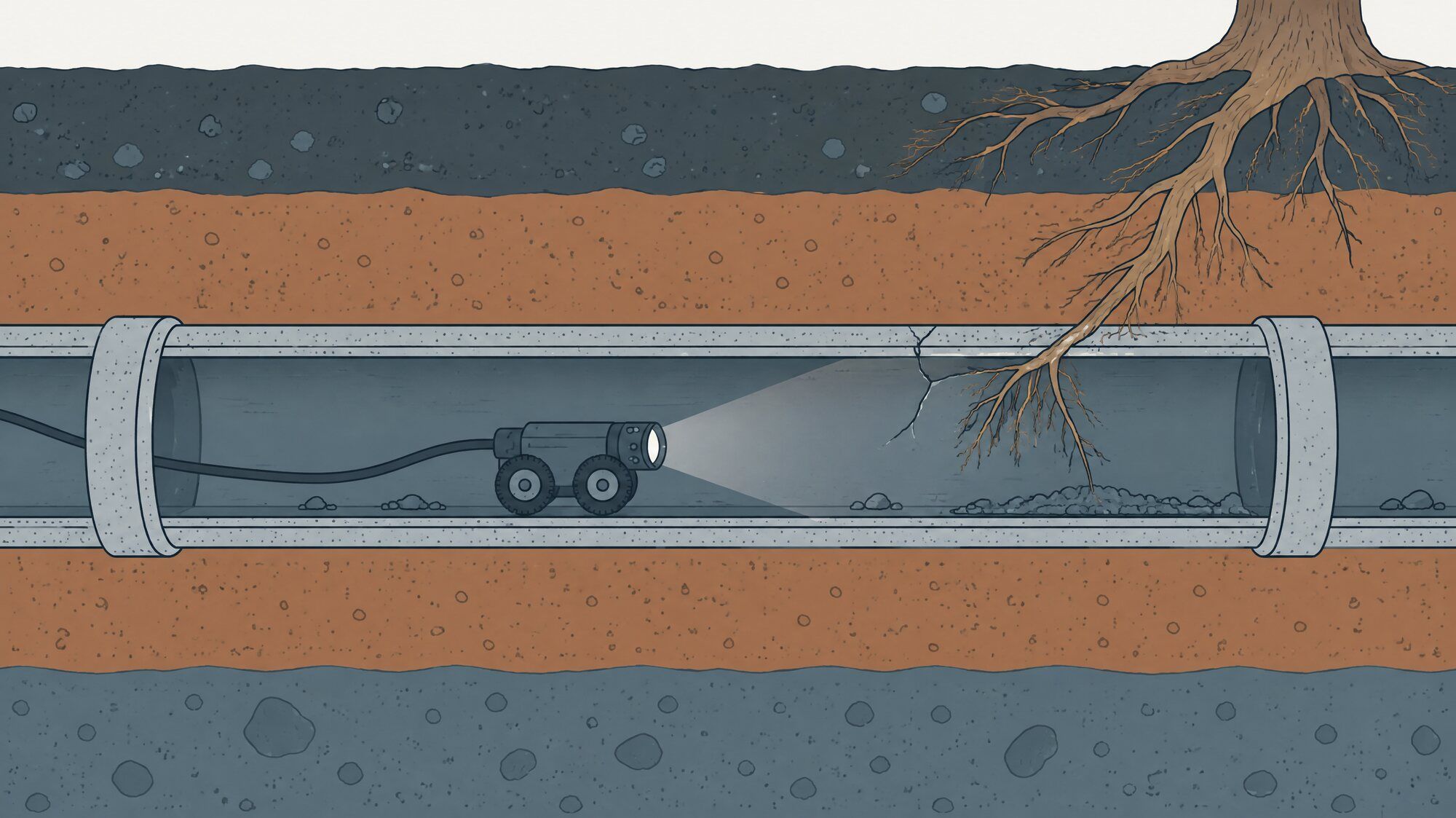
What the inspection is
The inspection is a video inspection: to pass, the entire inside surface of the pipe must be visible in the inspection video.
A licensed plumber or contractor must perform the inspection and complete the City inspection form. The City does not perform inspections. Admin Regs §II; inspection form(source: Administrative Regulations: Private Sewer Lateral Ordinance, opens in a new tab)
The completed inspection form is emailed to San Mateo Public Works at lateral@cityofsanmateo.org.
When San Mateo requires one
Selling a home
Selling a detached single-family or two-family home. The inspection happens before the sale.
Remodel or addition
A building permit for an addition or remodel of a detached one- or two-family home valued at about $90,000 or more. Confirm the exact threshold with the City.
Sewer overflow
A lateral backup that causes a sewer overflow at a commercial or multifamily building. Public Works decides whether an inspection is needed.
Change of use
A change of use at an existing commercial building that raises its sewer customer class. The City sends a notice.
What the report records
The City form records the inspection date, pipe size and material, the length from the cleanout to the main, a pass or fail result, the required work if it fails, whether the property has or needs a backwater valve, and whether outside drains or sump pumps are connected. The inspector signs it under penalty of law.
See the blank City form(City of San Mateo Public Works website, opens in a new tab)
- Inspection date
- Pipe size and material
- Length from cleanout to main
- Pass or fail
- Required work, if it fails
- Backwater valve: needed, and working
- Outside drains or sump pumps connected
- Inspector's signature and license
How the camera footage is graded
Every defect gets a grade from 1 to 5. The grades add up, and some single defects fail the lateral on their own. Multiple structural defects count once; operational defects count each time they occur.
| Defect | Grade |
|---|---|
| Crack | 2 |
| Fracture | 3 |
| Medium offset or separation (up to 1 pipe thickness) | 3 |
| Large offset or separation (more than 1 pipe thickness) | 4 |
| Sag, shallow (under 30%) | 3 |
| Sag, medium (30% to 50%) | 4 |
| Sag, deep (over 50%) | 5 |
| Broken, hole, deformed or collapsed | 5 |
| Defect | Grade |
|---|---|
| Roots, fine (under 5%) | 1 |
| Roots, medium (5% to 50%) | 3 |
| Roots, ball (over 50%) | 4 |
| Deposits (under 20%) | 2 |
| Deposits (20% to 30%) | 4 |
| Deposits (over 30%) | 5 |
Red grades fail the lateral on their own.
Pass or fail
To pass, the lateral needs all of these
- A standard building cleanout (no P-trap)
- No outside drains or sump pumps connected
- No grade 5 structural defect
- No grade 4 or 5 operational defect
- Total of all defect grades under 13
- The whole inside of the pipe visible on the video
If it fails
When a lateral fails, the inspector marks the required work on the City form: full replacement, spot repair, new connection to the main, P-trap removal with a new cleanout, jet cleaning, root removal, or other.
The deadline for the work depends on why the inspection was done: a sale, a remodel, an overflow or a change of use.
Read your failed report with the navigatorWhat to prepare before you book
- Find the cleanout. It is usually a capped pipe near the house; if there is none, tell the inspector before the visit.
- Know your deadline: the closing date, or when you plan to apply for the building permit.
- Have any earlier inspection report or replacement permit ready.
- Make sure the inspector will complete the City's form, not only their own report.
- Ask for the video. It is how you, a buyer or a second contractor can check the findings.
Request a lateral inspection
Tell us about the property and your deadline. We'll follow up about next steps.
- A person at Baysix Media reads every request.
- Your details go to a contractor only if you tick the referral box.
- The City does not recommend plumbers or contractors. Check any contractor's license before you hire.
The request form opens soon
It isn't taking requests yet, so nothing can get lost. Until it opens: check any contractor's license before you hire, and if you're planning a full replacement, apply for City cost sharing before work starts.
City cost sharing program(City of San Mateo website, opens in a new tab)
Inspection questions
Who can perform a San Mateo sewer lateral inspection?
A licensed plumber or contractor must perform the inspection and complete the City inspection form. The City does not perform inspections.
Where does the report go?
The completed inspection form is emailed to San Mateo Public Works at lateral@cityofsanmateo.org.
The City keeps inspection results and completed repairs in its permitting system. Questions about an existing inspection go to the Public Works encroachment permit team.
What makes a lateral fail?
To pass, the lateral needs a standard building cleanout (no P-trap), no outside drains or sump pumps connected, no grade 5 structural defect, no grade 4 or 5 operational defect, a total defect score under 13, and full pipe visibility on video.
Does a P-trap fail the inspection?
Yes, under the passing criteria on the City form.
To pass, the lateral needs a standard building cleanout (no P-trap), no outside drains or sump pumps connected, no grade 5 structural defect, no grade 4 or 5 operational defect, a total defect score under 13, and full pipe visibility on video.
Does cost sharing pay for the inspection?
Not covered: spot repairs, partial replacements, pothole repairs, additional street resurfacing, CCTV inspection and root work.